
Charlie is Not a Boy (2026)

-Written by Edmund Robertson.
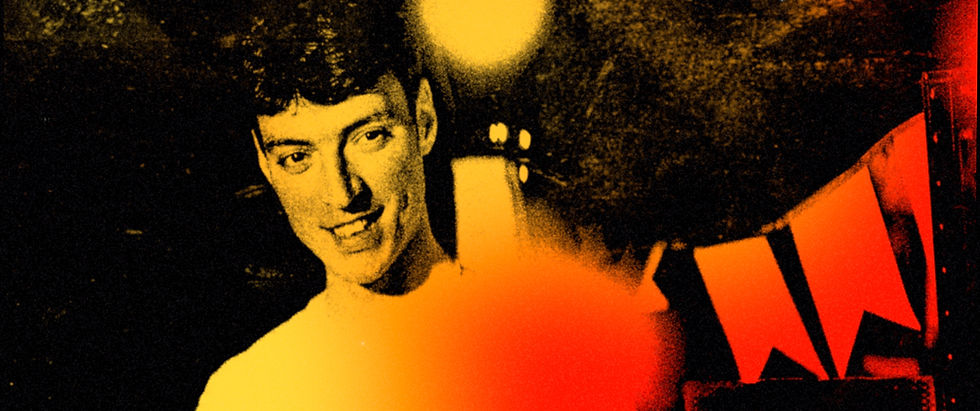
Surrealism and the macabre are often used in satire to point toward uncanny or absurd aspects of modern society, which is what Hungarian writer-director Pol Kurucz’s delightfully bizarre short film Charlie is Not a Boy does in spades. The short follows Charlie (Brooks Ginnan), the shy grown-up child of a sex-obsessed butcher (Máté Mészáros) and his emotionally distant wife (Gigi Spelsberg) who becomes pressured into becoming a part of their father’s family business. After the death of their beloved grandmother (Ágnes Bánfalvy), Charlie finds themself at the mercy of the expectations of their troubled family and society at large, though they soon find that what they really want is inside them all along.
I was gripped immediately by this short’s production design and tone as it utilizes pastel colors and cartoonish exaggerated shapes to illustrate a world that is inherently absurd in its expectations for Charlie. Some of the short’s darker imagery can be seen in its depiction of Charlie’s father, associating the phallic shapes and splattered blood of the meat that he sells with his proclivity towards infidelity and sexual violence. In the characterization of Charlie themself, they are depicted as soft-spoken to the point where a microphone is constantly taped to their chest and plugged into an amp, turning up the volume when they want to speak. This serves as not only a visual indicator of their shyness as it also foreshadows how in a world where masculinity is abusive and offputting, the sound of their own voice might sound alien to them.
The entire visual aesthetic of the short seems to take a page out of the work of Tim Burton, most notably Edward Scissorhands, in how it presents its characters and its world. In fact, both works are centered around an odd-looking protagonist trying to make their way through a vibrant suburbia that may look idealized on the surface yet proves itself to be much more dangerous and harmful than the protagonist would ever be. While Burton’s film focuses on the protagonist’s struggles to be accepted by this backwards society, Charlie is Not a Boy chooses to turn its focus toward self-discovery and self-acceptance as Charlie begins to realize how much their world has alienated them from what they truly want out of life.
Despite how the short looks inward toward Charlie’s inherent wants and needs, it also presents how their bond with their grandmother made them get in touch with their feminine side as a way to set themself free from the militaristic and abusive tendencies of toxic masculinity. While it is established that their grandmother helped Charlie realise these things about themself, it is also clear how multiple other aspects of their life allowed that change within them. In the few scenes we get of Charlie and their grandmother, she seems to heavily influence Charlie adopting her more feminine tastes, though within the context of the entire short, Charlie begins to view femininity as a source of comfort for them and an act of resistance against the uglier parts of their family life and the destructive expectations of the male-dominated world at large. By the end of Charlie is Not a Boy, self-actualization helps Charlie to realize who they want to be on their own terms, even if the world itself might not allow that of them.
While the ending feels kind of brief and bittersweet, Charlie is Not a Boy successfully brings together gothic surrealism and LGBTQ subtext to create an incisive satire of masculinity, reminding viewers of how necessary self-acceptance can be.
Directed by Pol Kurucz.
Written by Pol Kurucz and Pablo Larcuen.
Starring Brooks Ginnan, Máté Mészáros, Gigi Spelsberg, Ágnes Bánfalvy, etc.
8/10 = WORTH RENTING OR BUYING



Comments