
Star Trek: The Next Generation - The Mind's Eye (1991)

-Written by Kyle Bain.
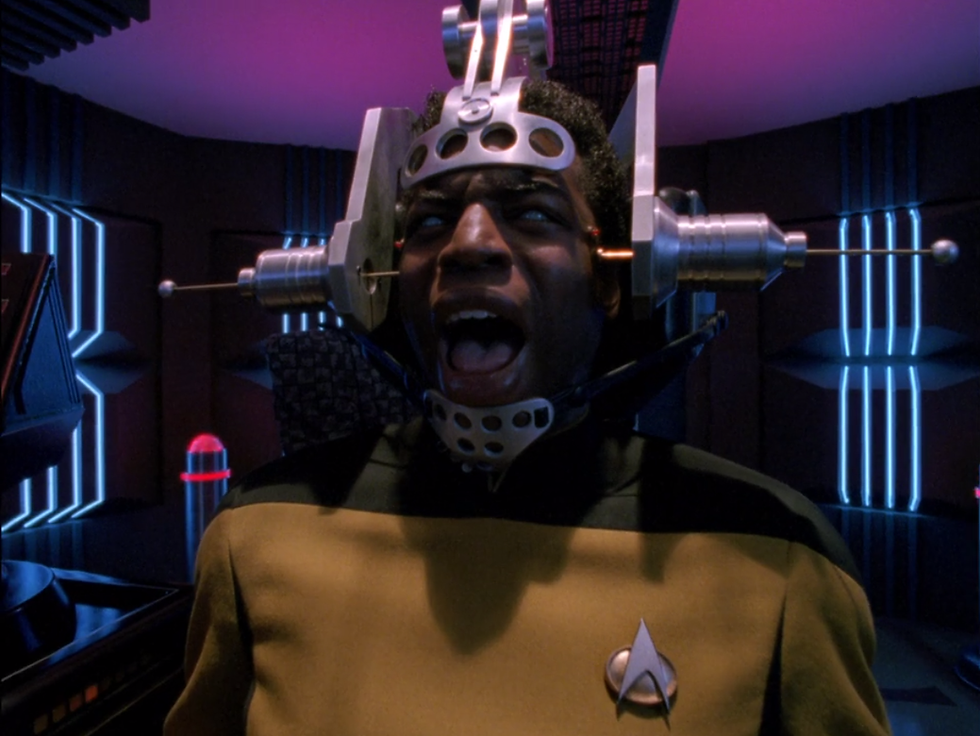
When Geordi (LeVar Burton) is kidnapped and brainwashed by the Romulans, the threat of war between the Klingons and the Federation seems imminent. A not-so-subtle intergalactic representation of the Cold War and the questionable tactics used throughout, Star Trek: The Next Generation - The Mind’s Eye explores espionage in a way not before seen.
What do I find attractive about Star Trek? If you’ve followed my journey through the countless science fiction properties that exist within this franchise, you know that the intelligent storytelling and dialogue play a key role in my admiration for this ongoing universe. The Mind’s Eye utilizes these tactics, leaning heavily into the idea of espionage and incorporating the aforementioned Cold War themes into it every step of the way. The Mind’s Eye is Star Trek at its best in this regard.
Furthermore, the characters have always played a prominent role in, not just my, but everyone’s love for the franchise. Geordi is a character that often takes a backseat to beloved characters such as Data (Brent Spiner) and Picard (Patrick Stewart), still playing an important and admirable role throughout the The Next Generation episodes and films. For the first time that I’ve seen, Burton has the opportunity to be the focal point of an episode, and Burton, being the superb actor that he is, delivers throughout. Tasked with playing multiple versions of Geordi LaForge, Burton transitions between them fluidly, allowing the character to remain accessible and even approachable throughout. Burton thrives in this unique position as Geordi, as he brings to life a slew of emotions that resonate with viewers and promise a deeper look into the character as the series progresses.
Opposite Geordi in The Mind’s Eye is a villain that misses the mark. Ambassador Kell (Lawrence Dobkin) lurks in the hypothetical shadows throughout the course of this episode, yet the mystery that is meant to surround him is ineffectively developed. What is meant to be a massive narrative twist seems obvious, and the vigor that should have existed within this aspect of the narrative is ultimately lost.
The issue that exists in that aforementioned reveal is present in a variety of other scenes as well. While I felt that The Mind’s Eye does an effective job of navigating the emotional pieces of these characters and the overall narrative, the most pivotal moments seem to lack the emotional gusto necessary to prompt a massive response from viewers. There is something lost in these moments, stealing from the intended intensity and drama of the episode.
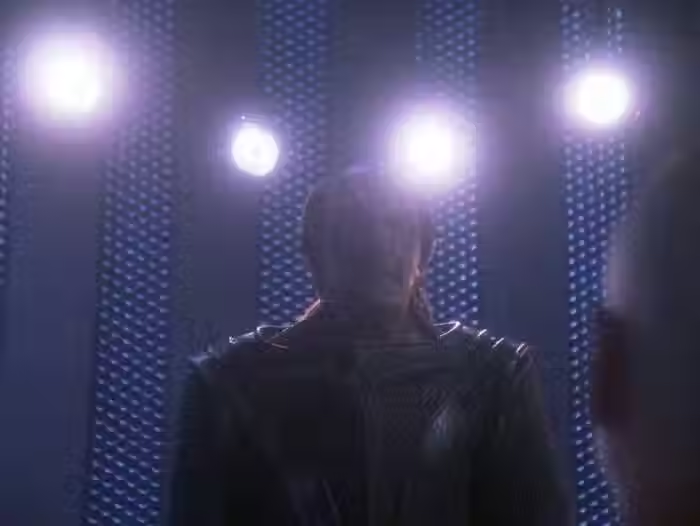
Marvin V. Rush plays one of the most important roles in The Mind’s Eye as its director of photography. Rush is a primary reason why this episode ultimately works. Keeping with the themes of espionage and wartime tactics, Rush helps to develop a mysterious and intense tone that transcends the episode. Shooting scenes from Geordi’s point of view, from behind a shelving unit, or keeping viewers immersed in literal darkness not only heighten the intensity of the episode, but are a primary reason why these tones are present in the first place. It’s not often that the director of photography gets credit for being one of the most important pieces of a production (even though we all know how important they are), but it’s imperative that viewers understand the role Rush played in the development of The Mind’s Eye.
Overall, I feel that it’s fair to say that The Mind’s Eye is a good, not great episode. It effectively incorporates the standard level of intellect that is the cornerstone of Star Trek as a whole, it primarily focuses on a character that is beloved but often slightly underutilized, and its immersive cinematography helps to develop a series of powerful and essential tones that greatly resonate with viewers. More attention to the big reveals of the episode could have propelled this episode toward greatness; and more of a focus on Geordi after the events of The Mind’s Eye could have further strengthened the episode as well.
Directed by David Livingston.
Written by Ken Schafer, René Echevarria, etc.
Starring LeVar Burton, Brent Spiner, Patrick Stewart, Michael Dorn, Lawrence Dobkin, John Fleck, Colm Meaney, Edward Wiley, etc.
7/10 = WATCH IT FOR FREE


Comments